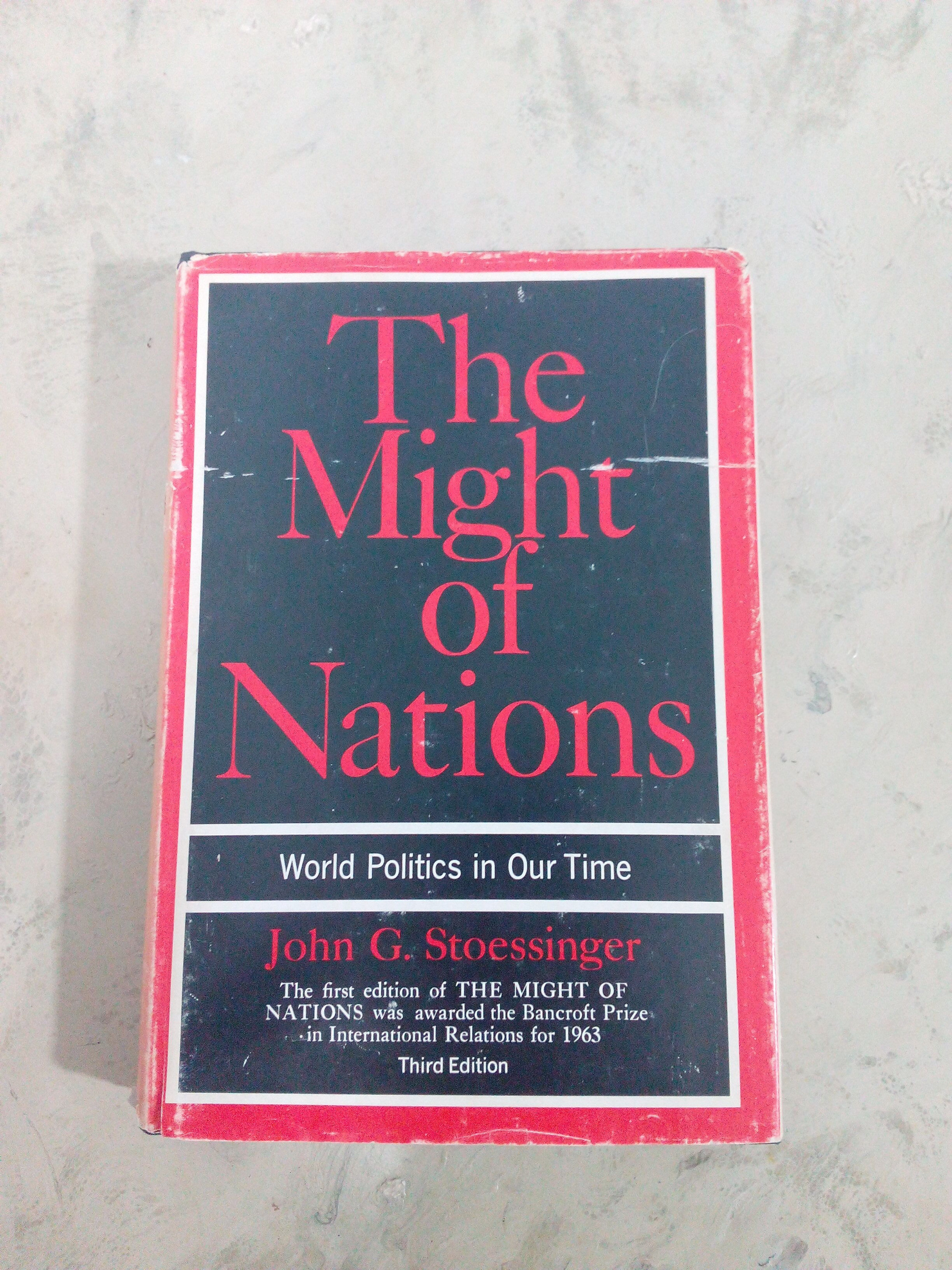
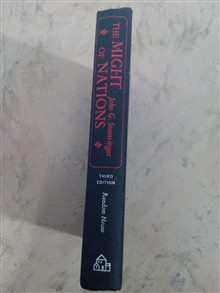
THE MIGHT OF NATIONS
1٬200٬000 تومان
مشخصات کالا
| نوع چاپ کتاب | چاپ اصل |
توضیحات بیشتر
The Might of Nations belongs to the tradition of serious twentieth-century writing on international politics in which the state is examined not as an abstract legal entity, but as a concentration of power, interests, institutions, resources, and strategic possibilities. The book approaches world politics through the problem of national power: how states acquire it, how they deploy it, how it is constrained, and why apparently unequal states can nevertheless exercise influence far beyond the simple measurement of territory, population, or military strength.
Its central concern is the structure of power within an international system in which no universally sovereign authority stands above states. National security, economic capacity, military organization, diplomacy, geography, technological development, political institutions, and the cohesion of society consequently become interconnected components of international influence. Power is not treated as a single measurable substance but as a composite and historically contingent capacity whose meaning changes according to circumstances.
One of the books more important implications is that international politics cannot be understood through military force alone. A state may possess substantial armed strength and yet remain strategically limited by economic weakness, geographical vulnerability, internal divisions, technological dependence, or diplomatic isolation. Conversely, economic resources, industrial capacity, institutional stability, alliances, and diplomatic credibility can transform a states position without any corresponding expansion of territory. The analysis therefore directs attention toward the complex relationship between material resources and the political capacity to convert those resources into effective power.
The book is particularly valuable when read against the historical transformation of the modern international system. The rise of industrial states, the increasing interdependence of national economies, technological change, the expansion of mass politics, and the emergence of increasingly destructive forms of warfare altered the traditional meaning of national strength. Power became simultaneously more concentrated and more difficult to calculate.
Rather than presenting international politics as a simple confrontation between individual states, The Might of Nations invites the reader to examine the system within which national decisions acquire significance. Alliances, rivalries, strategic calculations, economic pressures, and perceptions of relative strength continually modify the choices available to governments. The result is a conception of world politics in which national power is relational: a states capabilities acquire meaning in comparison with those of other states and within a particular historical configuration.
For the serious reader, the book is consequently useful not merely as a study of national strength but as an examination of the mechanism through which power is translated into international influence. Its enduring interest lies in the refusal to reduce geopolitics to either military statistics or diplomatic personalities. Behind individual crises lies a deeper architecture of resources, institutions, strategic interests, and unequal capacities.
The Might of Nations is therefore best approached as a work concerned with one of the permanent problems of international politics: how power is accumulated, perceived, converted, constrained, and ultimately transformed into political action among states.

